
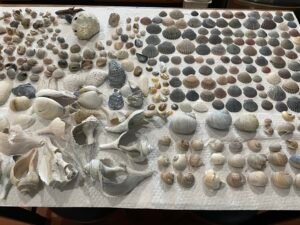
Seashells and other beach treasures typically come home with sand, salt, odors, or tiny bits of organic material attached. Cleaning and preserving them properly helps protect their natural color, shape, and shine without causing cracks or fading. With a gentle approach and a little patience, you can preserve your seashell collection a long time.
Gentle Ways to Clean Seashells Without Damage
Start by rinsing your seashells in clean, lukewarm water to remove loose sand and dirt. Avoid using hot water, as sudden temperature changes can weaken fragile shells. If the shells are especially sandy, let them soak in a bowl of fresh water for several hours or even overnight, changing the water when you notice a lot of sand and debris.
For shells with stubborn debris, use a soft toothbrush or small brush to gently scrub the surface. Work carefully around ridges, points, and delicate edges so you do not chip or scratch them. A mild dish soap (like Dawn) can be used if needed, but rinse thoroughly afterward to remove any residue that might dull the shell’s natural finish.
If a shell has a strong odor, it may still contain organic material. Soaking it in fresh water for a day or two can help loosen anything inside. Some collectors use a diluted bleach solution, but this should be done cautiously because bleach can fade colors and weaken shells if they soak too long. If you choose this method, use a very weak solution, soak briefly, rinse extremely well, and allow the shells to dry completely. I typically opt for the mild dish soap and skip the bleach, but that is my personal preference.
How to Preserve Seashells for Lasting Beauty
After cleaning, let your seashells air-dry fully on a towel in a shaded, well-ventilated area. Avoid placing them in direct sunlight for long periods, since sunlight can fade their natural colors. Make sure they are completely dry before storing or displaying them, as trapped moisture can lead to unpleasant smells or mildew.
To bring out a shell’s natural shine, you can lightly rub it with a small amount of mineral oil or baby oil using a soft cloth. Use only a thin layer, because too much oil can make the shell feel greasy and attract dust. This step is optional, but it can help enhance color and give the shell a polished, well-kept appearance.
Store seashells in a dry place where they will not be crushed or knocked around. Small shells can be kept in glass jars, shadow boxes, or divided containers, while larger shells can be displayed on shelves away from humidity and direct sunlight. Handle delicate shells with care, and dust them occasionally with a soft brush or cloth to keep them looking clean and beautiful.
Cleaning and preserving seashells properly is all about being gentle, patient, and mindful of their delicate structure. By rinsing away sand, removing debris carefully, drying them fully, and storing them in a safe place, you can enjoy your beach treasures for many years. Whether displayed in a jar, arranged in a frame, or kept as special souvenirs, well-cared-for seashells can hold onto the beauty of the ocean long after your trip has ended.
